Handfasting — where "tying the knot" comes from
Long before marriage certificates, couples declared themselves by joining hands and binding them with ribbon or cloth. The phrase "tying the knot" comes straight from it, and it is still the most popular Scottish tradition to bring into a modern ceremony.
Handfasting is usually described as a Celtic custom going back around two thousand years, sometimes as a betrothal that lasted a year and a day before the couple decided whether to make it permanent. Historians argue about how widespread that really was, but the symbolism has outlived the history.
How it works on the day
Your celebrant asks you to join hands, then binds them with cords while speaking the words you have chosen. It takes a couple of minutes, it photographs beautifully, and it gives your guests something to watch besides the two of you signing paperwork.
Many celebrants will invite parents, siblings or children to lay a cord each, which turns it into the part of the ceremony everyone remembers.
What the colours mean
- Red for passion and love
- Green for growth and fertility
- Blue for loyalty and peace
- White for purity and honesty
- Gold for prosperity and happiness
Plenty of couples skip the colour meanings entirely and use their family tartans instead, which is arguably the most Scottish option of the lot.
Where you tend to see it
- Humanist ceremonies
- Outdoor and castle weddings
- Vow renewals
The quaich — the cup of friendship
A quaich is a shallow two-handled cup, from the Gaelic word for cup. You fill it with whisky, and the couple drink from it together.
The two handles are the whole point. You need both hands to hold it, so you cannot conceal a weapon and you cannot pull it back — it is a gesture of complete trust between two families who, historically, may not have had much reason to trust each other.
It is a lovely, quick moment: the couple drink first, and often the parents after them. If neither of you drinks whisky, nobody will mind if there is something else in it.
The piper
If you have ever heard pipes start up outside a Glasgow church, you will know why couples pay for this.
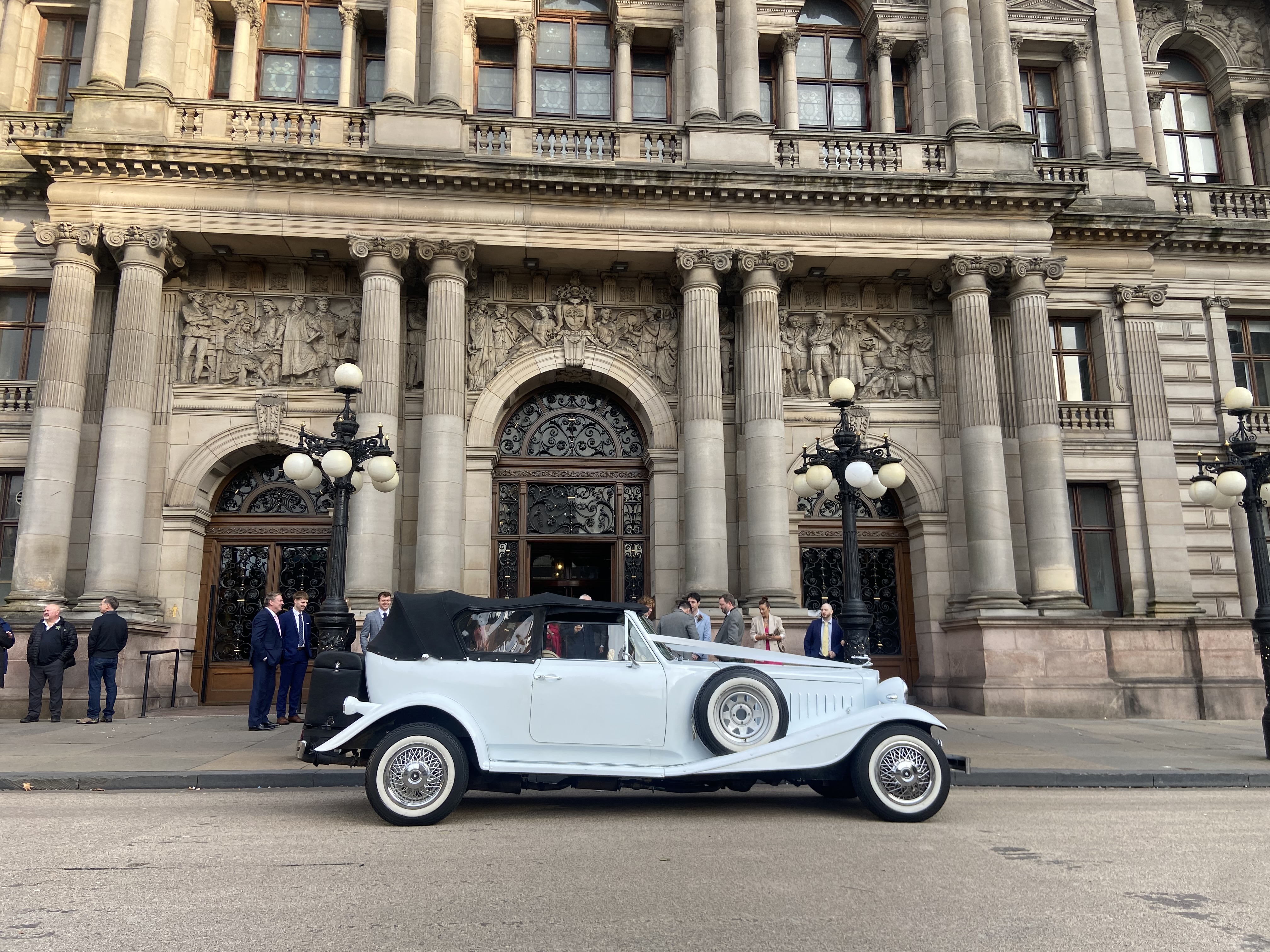
A piper typically pipes the bride in, leads the couple back out after the ceremony, and pipes the top table into the reception. Some couples have him play as the cars pull away, which is a moment worth planning for.
Book early for summer Saturdays. Good pipers get taken quickly, and you want one who plays weddings regularly rather than someone who owns a set of pipes.
Kilts and tartan
There is no rule that says you need a family tartan. If you have one, wear it. If you do not, the hire shops carry universal setts — Black Watch, Isle of Skye, Highland Granite — and nobody will interrogate you about it.
Worth knowing: hire shops need measuring appointments months ahead for a summer wedding, and the whole party needs to go together if you want the outfits to match properly.
The luckenbooth brooch
A silver brooch of two intertwined hearts, usually topped with a crown. The name comes from the locked booths that once stood near St Giles' in Edinburgh, where they were sold.
Traditionally it was a betrothal gift from groom to bride, pinned to her shawl. Many families then pin it to the first baby's blanket for luck, which makes it one of the few wedding traditions that keeps going long after the day.
White heather
Carried in the bouquet or worn in a buttonhole, white heather is the classic Scottish good-luck charm. It is easy for a florist to include and costs almost nothing, and it is a nice nod for couples who do not want anything more elaborate.
The scramble
One for the neighbours. As the bride leaves the house, coins are thrown from the car window for the local children to scramble for.
You will still see it in parts of Glasgow and Lanarkshire, and it needs almost no organising — just a bag of change handed to whoever is in the car. Tell your driver beforehand, though, so nobody pulls away at the wrong moment.
The blackening
Not for the faint-hearted, and mostly a north-east and rural tradition rather than a Glasgow one.
In the days before the wedding, friends cover the bride or groom in treacle, soot, feathers and whatever else is to hand, then parade them around the town. The idea is that if you can survive that with good humour, you can survive marriage.
If someone in your wedding party mentions it, take it as a warning.
The oathing stone
Each of you holds a stone during your vows, or you place your hands over one together, and afterwards it is kept in your home. Some couples use a stone from a place that matters to them — a beach, a family croft, the grounds of the venue.
It gets described as an ancient Celtic rite, and the honest answer is that the evidence for that is thin. It is a modern favourite that feels old, and there is nothing wrong with that.
The ceilidh
The ceilidh is the part your guests will talk about. A band, a caller who shouts the steps, and no requirement whatsoever that anyone can dance.
The three worth knowing
- The Gay Gordons — the usual opener, and the easiest to fake
- The Dashing White Sergeant — in threes, so nobody is left out
- Strip the Willow — chaotic, exhausting, and the one everyone remembers
A good caller walks the room through each dance first. If half your guests are from outside Scotland, say so when you book the band, and they will pitch it accordingly.
Choosing which ones to use
You do not need all of these. Most couples pick two or three that mean something and let the rest go.
If you want a rough steer: handfasting for the ceremony, a piper for the arrival, and a ceilidh for the evening is the combination that turns up most often, and it works because each one lands at a different point in the day.
Traditions cost time as well as money. A handfasting, a quaich and a scramble will add fifteen to twenty minutes across the day — worth building into your timings so the photographs do not get squeezed.